Laser therapy for pain and inflammation in the feet and legs, at our clinic in Radlett. Our MLS and MiS lasers use infrared light energy to help your cells heal, with no pain or sensation during treatment.
What can laser therapy help with?
MLS laser therapy is a cutting-edge treatment that uses light energy to stimulate your body’s natural healing process. It is a safe, non-invasive treatment for a wide range of musculoskeletal conditions.
We most often use it for plantar fasciitis (heel pain), Achilles tendinitis, bursitis, sprains, joint pain and osteoarthritis. We also treat ulcers and peripheral neuropathy. The MiS laser is specifically indicated for the treatment of peripheral neuropathy and neuropathic pain (read the research).
We can also treat other areas of the body, subject to a referral letter or the result of scans. We also have physiotherapists at our clinic, and we coordinate treatment with them as needed. Your initial consultation is typically with the podiatrist.
How does laser therapy work?
Laser therapy uses light to stimulate and accelerate the body’s natural healing processes. The laser is moved over the skin so that the light energy (photons) penetrates the tissue and interacts with your cells. It has three effects at once: it relieves pain (an analgesic effect, one of its main benefits), it calms inflammation, and it stimulates your cells to repair.
How it works, in more detail
MLS stands for Multiwave Locked System. It uses 808nm and 905nm energised light in both pulsed and continuous emission, which produces an efficient and synergistic effect on the deep tissues. The type of laser and the dose depend on the structures being treated, and this is all pre-programmed in the machines according to the site and type of problem.
Light energy helps heal injuries and decrease pain by:
- Stimulating cells to remove toxins (pro-inflammatory molecules)
- Allowing oxygen and food loads into the cell (vasodilation), which also helps relax muscle contractions
- Blocking and slowing pain signals in the brain and releasing endorphins and encephalin (natural painkillers)
- Increasing the production and growth of cells, bringing blood flow into the area and accelerating the healing process
- Jumpstarting the body’s own healing process by stimulating the mitochondria in the cells
MLS or MiS?
You do not need to choose. We select the laser and the dose that suit your condition and the area being treated.
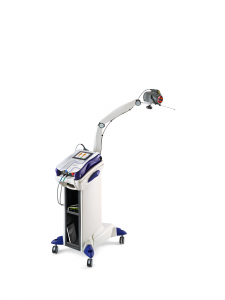
MLS
We use the Mphi 5 multi-diode system, with a large and a smaller handpiece. That means large areas or joints can be treated, or two areas at the same time.
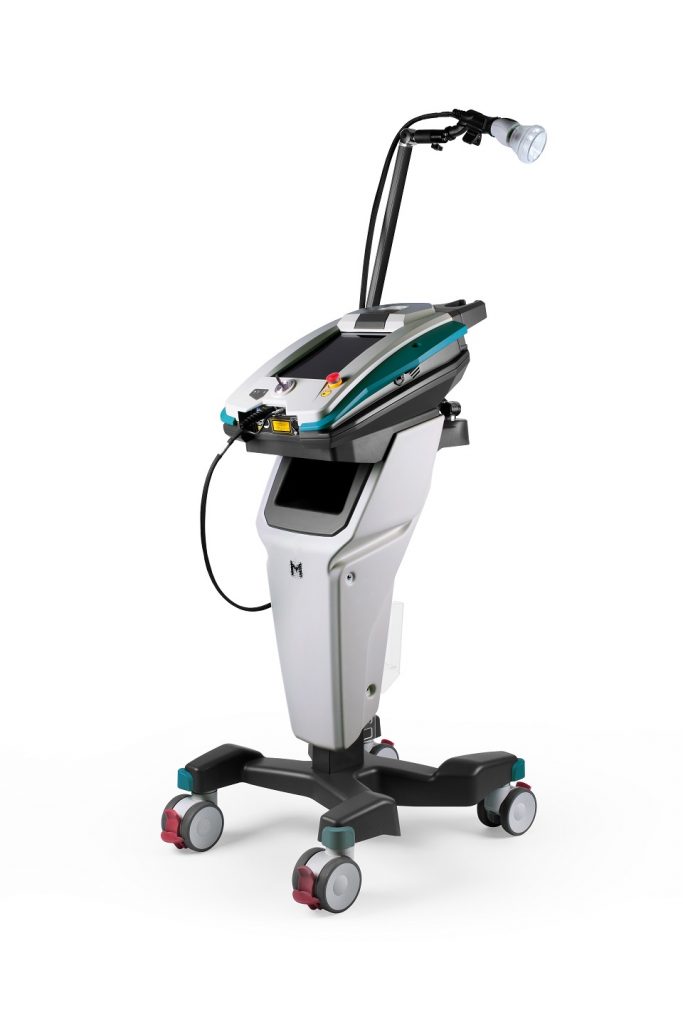
MiS
Essentially the same as the MLS, but five times more powerful. That lets it penetrate deeper, and treatment times are faster. There is still no pain or sensation.
What to expect
- Assessment and plan. Your podiatrist will assess and diagnose your problem, and provide a treatment plan of which the MLS is part. Laser works best as part of a combined approach, so we also consider exercises (stretching or strengthening), footwear advice, orthotics or insoles, activity modification and strapping.
- Your treatment plan. The laser treatment regime is created by the podiatrist. It is usually applied by our practice manager, as prescribed by the podiatrist.
- Treatment. Most foot problems take around 20 minutes to treat, and a knee might take half an hour. You will not feel pain or any sensation during treatment. Everyone in the room wears protective goggles.
- Results. Many patients report reduced pain and increased mobility within three treatments, and six to ten sessions are usually advised, depending on the condition. We usually see you twice a week, and sometimes use a tapering plan of three sessions in the first week, two in the second and one in the third. Chronic conditions may take longer, and acute or more recent conditions tend to respond faster. It is important to complete the course of treatment. We monitor your progress throughout and adjust the treatment as needed.
What treatment looks like
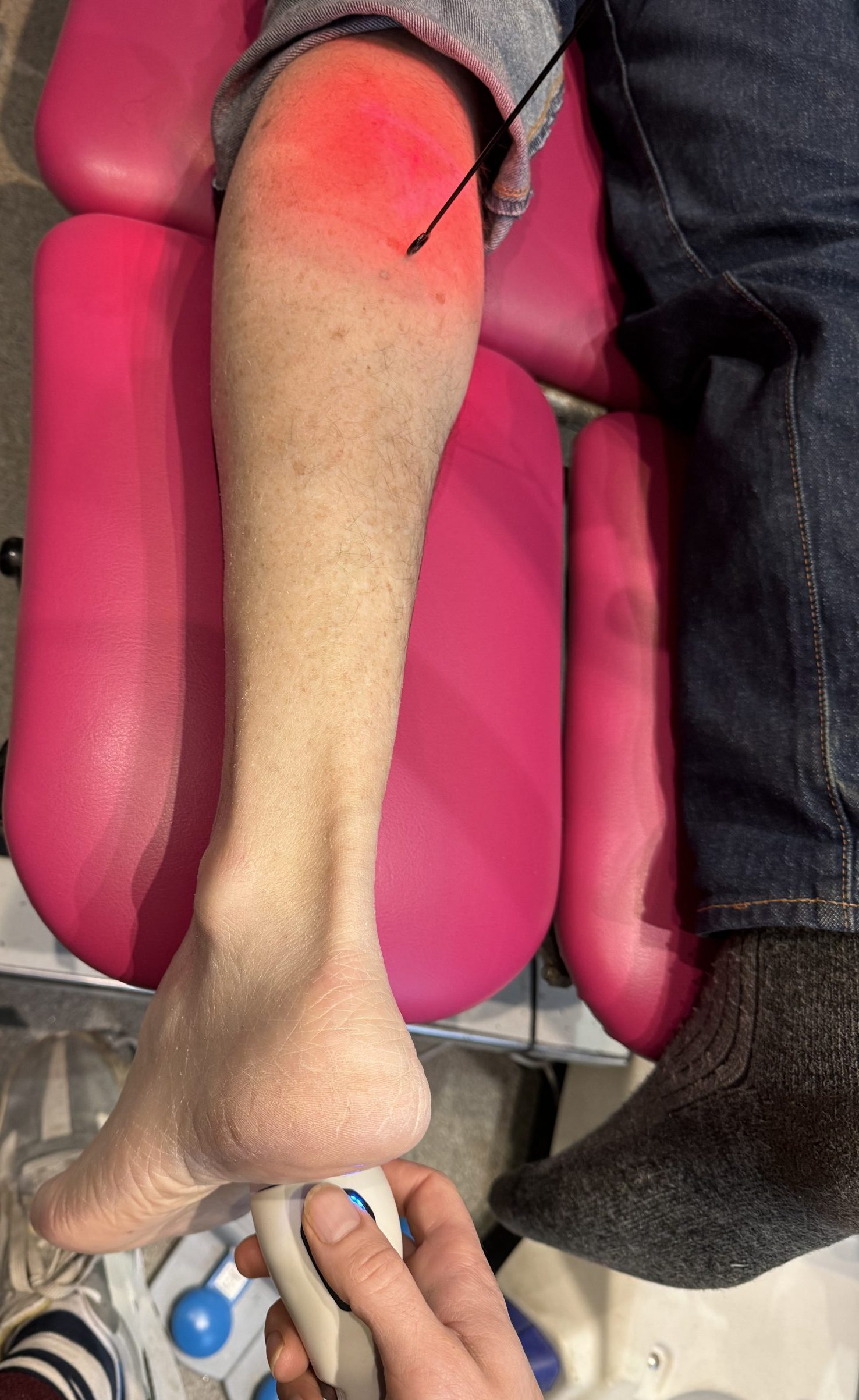
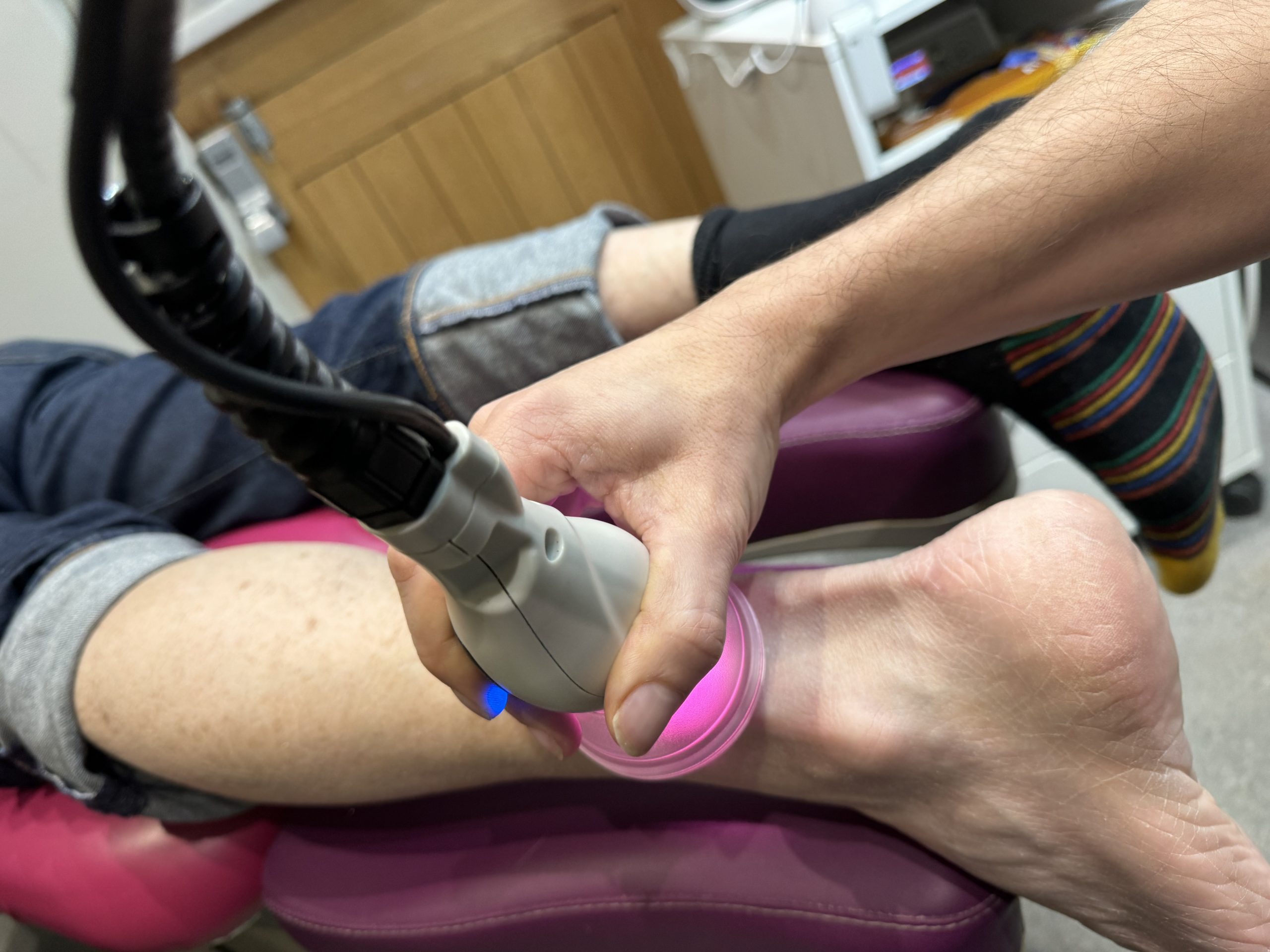
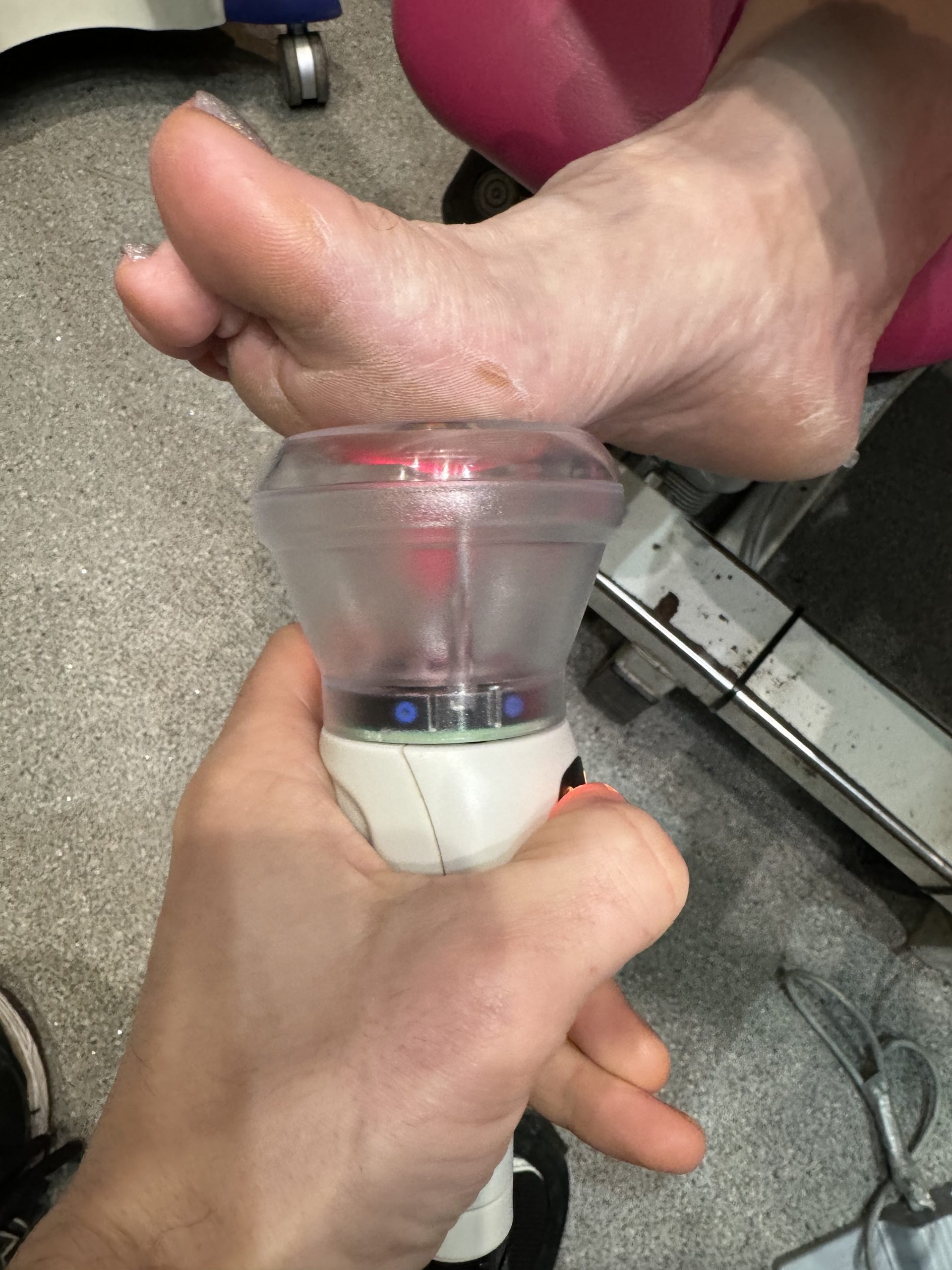
Tap a photo to see it larger.
Are there any side effects?
Side effects are uncommon and usually mild. The one you are most likely to notice is a short-lived treatment flare, also called a healing or rebound response. The treated area feels sore or achy, sometimes more than before the session, for a day or two. It is most common after a first session, and with long-standing (chronic) tendon problems such as Achilles tendinopathy.
A flare is a sign that the tissue has responded. Your cells absorb the light, blood flow increases and the repair process starts, and that extra activity can feel uncomfortable for a short while. It does not mean anything has been damaged.
We ask about any reaction every time we see you and adjust the laser settings to suit. After a flare we may use a gentler setting, or leave longer before the next session. A short delay does not harm your overall plan.
Darker skin. Darker skin can absorb the light faster. In these circumstances we use a lower intensity of energy for a longer amount of time.
Is laser therapy suitable for me?
We can treat children and people with diabetes. We assess each patient first. Laser therapy is not suitable in some situations, including pregnancy, active bleeding, if you have taken medicines that make the skin sensitive to light (photosensitising drugs), and where there is a tumour. Please tell us if any of these apply to you.
Results
Most of our patients find that laser therapy works for them. Results vary, and chronic conditions can take longer to respond.
What does the research say?
Laser therapy has been studied for several of the problems we treat. These are the studies we have checked, grouped by condition. Open any heading to read more.
Plantar fasciitis and heel pain
Plantar fasciitis is one of the most common conditions we treat with MLS laser, and the research is encouraging, with some caveats.
- A 2023 review of 9 randomised trials found that high-intensity laser reduced first-step morning pain and improved foot function, with benefits lasting at least 3 months. de la Barra Ortiz et al., Advances in Rehabilitation, 2023.
- When laser has been compared directly with shockwave, results were broadly similar. A 2026 review of 5 trials found no significant difference in pain, with a small advantage for shockwave in foot function. Wu et al., Bioengineering, 2026. A trial of 66 people found laser reduced pain more than shockwave in the short term, and both beat standard care alone at 3 months. Cinar et al., Foot and Ankle International, 2018.
- A 2026 meta-analysis of 13 randomised trials found that laser reduced heel tenderness, although pain and function overall did not improve significantly across all the trials. The authors concluded that laser is best used alongside established treatments such as exercise and orthoses, rather than on its own. Ortiz-Romero et al., Journal of Clinical Medicine, 2026.
That matches how we use it. At A&A Podiatrists we typically combine MLS laser with a tailored programme that may include orthotic support, stretching advice and activity modification.
Achilles tendinopathy and other tendon problems
Achilles tendinopathy (persistent pain and stiffness in the Achilles tendon) can respond well to MLS laser, particularly when it has become chronic and the tendon’s natural healing has stalled.
- A 2022 meta-analysis of 18 randomised trials (Achilles, plantar fascia and patellar tendon) found that laser reduced pain by about 13 mm on a 100 mm scale compared with control treatment, with a similar benefit at 4 to 12 weeks. Results depended on dose: trials using the recommended doses did better, and trials using other doses showed no significant benefit. No adverse events were reported, but long-term data were not available. Naterstad et al., BMJ Open, 2022.
- An earlier review found laser can be effective for tendinopathy when recommended doses are used. In the higher-quality Achilles trials, pain fell by about 13.6 mm on a 100 mm scale. Tumilty et al., Photomedicine and Laser Surgery, 2010.
What this means for you: tendons heal slowly, so improvement is usually gradual rather than immediate. Some people notice a short-lived increase in soreness after the first one or two sessions as the repair process is activated. This is a recognised response and usually settles within a few days.
Peripheral neuropathy
MLS laser may help with nerve pain, numbness or altered sensation in the feet, particularly diabetes-related neuropathy.
- In a randomised trial of 60 people with diabetic peripheral neuropathy, laser treatment of the feet improved both symptoms and measured sensation, with no side effects reported. Ebadi et al., Journal of Lasers in Medical Sciences, 2023.
This was a single, small trial, so the evidence is promising rather than conclusive. Laser is a gentle, non-invasive option that is thought to act on nerve tissue and local circulation. We always carry out a thorough assessment before recommending it for neuropathy, to make sure it is appropriate for you.
Knee osteoarthritis
Knee osteoarthritis is a common source of chronic joint pain, and laser therapy has one of the stronger evidence bases of the conditions we treat.
- A review and meta-analysis of 22 randomised trials (1,063 people) found that laser reduced pain and disability in knee osteoarthritis. Pain fell by about 14 mm on a 100 mm scale by the end of treatment. With the recommended doses, the reduction was about 19 mm at the end of treatment and about 23 mm at follow-up 2 to 12 weeks later, so the benefit kept building after the course finished. No adverse events were reported. Stausholm et al., BMJ Open, 2019.
As with tendon problems, dose matters. We will always assess your knee and your overall foot and lower limb mechanics before recommending a course of treatment.
Big toe joint stiffness (hallux limitus and rigidus)
Hallux limitus (reduced movement of the big toe joint) and hallux rigidus (severely restricted movement) are degenerative joint conditions that cause pain, particularly when pushing off. MLS laser can help manage the pain and inflammation, particularly in the earlier stages.
- Good trials of laser for these two conditions specifically are limited. A small study of 17 people with chronic foot and ankle joint pain found significant pain reduction, with 15 of the 17 rated as good or excellent, and best results when laser was combined with postural education. Ankle movement did not change. Izukura et al., Laser Therapy, 2017.
- A review of conservative treatment for hallux rigidus identified footwear modification, insoles and hyaluronic acid injections as the best-supported options. Herrera-Perez et al., Journal of the Foot and Ankle, 2021.
That is why we use laser for pain and inflammation alongside footwear advice and orthotic support, which offload the joint and help slow the progression. We will assess the stage of your condition and advise whether laser, orthotics or a combination suits you best.
An honest note: research quality varies, studies use different lasers and doses, and none tested our exact machine. The neuropathy trial was small, and evidence for the big toe joint in particular is limited. Evidence for combining laser with shockwave is also limited, so any combined approach rests on clinical experience.
Laser works best as part of a wider plan
MLS laser is a clinically effective treatment, but it works best as part of a wider plan rather than a standalone solution. Chronic musculoskeletal conditions develop over months or years, and lasting recovery usually means addressing the underlying causes as well as the pain. Depending on your condition, your plan at A&A Podiatrists may include a combination of:
- MLS laser therapy: to reduce pain and inflammation, and to stimulate the body’s natural healing and repair processes.
- Orthotic insoles: custom-made or prefabricated devices to correct foot mechanics, redistribute pressure and offload vulnerable structures such as the plantar fascia, Achilles tendon or big toe joint.
- Footwear assessment and advice: making sure your shoes provide appropriate support, cushioning and fit for your condition and activity level.
- Stretching and strengthening: structured exercise, including eccentric loading for tendon conditions, is one of the best-supported parts of recovery and is often the difference between short-term relief and long-term resilience.
- Activity and load management: identifying which activities are loading the injured structure and how to modify them while you recover, without stopping you doing everything you enjoy.
- Strapping and taping: short-term offloading and support for acutely painful periods.
- Manual therapy and joint mobilisation: hands-on treatment to improve joint movement, reduce stiffness and support the surrounding soft tissues.
- Weight and lifestyle guidance: body weight directly influences the load on the foot and lower limb. Where relevant, we will discuss this sensitively as part of your plan.
- Shockwave therapy: we do not provide shockwave ourselves, but for certain tendon and fascia conditions it can work alongside laser. If we think it would help you, we will refer you on.
- Padding and offloading: particularly for forefoot conditions, bursitis or areas of localised pressure.
When we would refer you on
We are committed to providing the most appropriate care for every patient. Sometimes that means recognising that further investigation or specialist input is needed before or during a course of treatment. We may recommend referral to a consultant, or for imaging, if:
- Your symptoms are not improving as expected: if a full course of conservative treatment, including laser, has not produced the improvement we expected, further investigation is needed to rule out structural problems or explore other options.
- We suspect a structural injury: conditions such as a partial or complete tendon tear, stress fracture or significant ligament damage cannot be fully assessed without imaging. An MRI or ultrasound scan may be recommended if the picture suggests more than soft tissue inflammation.
- Imaging would change your management: for example with suspected Morton’s neuroma, severe hallux rigidus or joint degeneration, an X-ray, ultrasound or MRI can help us give a more accurate diagnosis and the right treatment pathway.
- Nerve-related symptoms are prominent: if you have significant numbness, pins and needles or altered sensation, nerve conduction studies or a neurology review may be appropriate, particularly to tell nerve entrapment from peripheral neuropathy.
- You may benefit from a consultant-led intervention: some conditions, such as advanced hallux rigidus, severe osteoarthritis or tendon problems that have not responded to conservative care, may need a surgical opinion. We will be straightforward with you if we think this is the case.
- Something is outside our scope: including any suspicious lesion, unexplained swelling, or symptoms that may suggest an underlying systemic condition.
We work closely with orthopaedic consultants, rheumatologists, musculoskeletal radiologists and vascular specialists in the region, and we will make sure any onward referral is handled promptly with a clear clinical summary.
How much does it cost?
| First appointment: musculoskeletal (MSK) assessment, diagnosis and treatment plan (45 minutes). If MLS laser is suitable and there is time, your first laser session is included | £120 |
| Shorter MSK appointment for sooner availability (30 minutes) | £120 |
| Laser session: one area | £55 |
| Laser session: two areas (for example, both feet) | £75 |
| Laser session: three areas | £100 |
Your first appointment is usually a musculoskeletal (MSK) appointment with the podiatrist. It costs £120, and if MLS laser is suitable and there is time, your first laser session is included. If the wait for a 45-minute appointment is too long, you can check the slightly shorter 30-minute appointment with the podiatrist, which may have sooner availability.
Laser session prices are typical for an appointment between 9am and 4pm, and are paid at the time of the appointment. We may adjust the price, up or down, depending on the time, the areas treated and the problem, and if you need more treatments.
Book an MSK appointment ↓Book a shorter appointment (30 mins) ↓
Frequently asked questions
What happens at my first appointment?
How long does a treatment take?
How many treatments will I need?
When will I notice a difference?
Many people notice an improvement in pain and comfort within two to four sessions. For tendon conditions, the biggest improvements are often felt from about four to eight weeks into the course, and sometimes after it has finished, because the body needs time to complete its natural repair process. Sessions are usually about a week apart.
Does it hurt?
What does the laser actually do?
The MLS laser sends infrared light energy through the skin into the tissue underneath. You do not feel heat or pain while it is on. Your cells absorb the light, and their mitochondria (the structures that produce energy inside each cell) respond. Blood flow increases, growth and repair factors are released, and the body starts to lay down new collagen in the damaged tissue.
It has three effects at once: it relieves pain (an analgesic effect), it calms inflammation, and it stimulates repair. So it is not just a pain-relieving treatment. It prompts your body’s own healing process, which is why it can help problems that have stopped repairing by themselves.
What are the side effects of MLS laser?
Side effects are uncommon and usually mild. The most common is a short-lived treatment flare: the area feels sore or achy for a day or two after a session, most often after the first one. Darker skin absorbs light faster, so we use a lower intensity for longer. See Are there any side effects? for what to do.
Why is it more sore after my first session?
This is called a treatment flare, and it is a recognised, expected response. With a long-standing (chronic) tendon problem, the tissue has often become “stuck” and needs a real dose of energy to restart repair. When it responds, there is a temporary rise in activity and sensitivity in the area. Sometimes a tendon reacts more strongly than we expected, even when we have started cautiously.
If the soreness then eases over a few days, that is a good sign that the healing process has begun.
What if it feels worse after treatment?
Try not to worry. Feeling more sore for a day or two is the commonest reaction, and it usually settles by itself. Painkillers (if suitable for you) or an ice pack can help.
Please call us on 01923 856 235 if it is not easing after a few days, if it is getting worse, or if you are concerned for any reason. We will talk it through and, if needed, hold off the next session until things have settled. Treating a tendon that is still very irritated would not be right, and a short delay will not spoil the overall programme.
How long does the soreness last?
Usually a day or two, occasionally a little longer. Most people notice it easing and then feel better than before. We would like to hear how you are before your next session, so please call or message us if you can.
Will my next session be different if I had a flare?
Often, yes. The laser has different treatment protocols. The chronic protocol gives deeper stimulation to long-standing tissue that needs a push to start repairing. The acute protocol is designed for tissue that is reactive or sensitised: it focuses on calming inflammation and easing discomfort, and is much less likely to cause soreness afterwards.
If you have had a flare we may switch to the acute setting, or start at a lower intensity, and leave a little longer before the next session. We also like to check how you are before we go ahead.
How long does a tendon take to heal?
Longer than most people expect. Healing happens in three overlapping stages:
- Inflammatory phase (about the first 1 to 2 weeks). The body clears damaged tissue and prepares for repair. Laser supports new blood vessel growth and anti-inflammatory factors, although the first stimulation can briefly increase sensitivity.
- Proliferative phase (up to about 4 weeks). Cells called fibroblasts make new collagen and start rebuilding the tendon. Laser supports this activity.
- Remodelling phase (months, sometimes over a year). The collagen matures and lines up, gradually restoring the strength and elasticity of the tendon.
A flare in the first days belongs to the early inflammatory stage, and is part of the process rather than a setback.
Is it safe?
What is the difference between MLS and MiS?
What is the difference between laser and shockwave?
Shockwave uses pulses of sound (acoustic) energy to cause tiny areas of damage (microtrauma) in the tissue, which prompts the body’s healing response. Laser uses infrared light energy, which is absorbed by your cells and energises them into healing, without damaging the tissue.
We offer laser, not shockwave. If we think shockwave would help you, we will refer you on.
Does laser therapy relieve pain?
Yes. This analgesic effect is one of its main benefits. The laser eases pain by calming irritated nerves and reducing inflammation, while also stimulating the tissue to repair. Many patients notice less pain within the first three treatments.
Is laser or shockwave better for heel pain and plantar fasciitis?
Both can work, in different ways, and studies comparing them have found broadly similar pain relief. Shockwave is often used for very long-standing heel pain where fibrous, scar-like tissue has built up, because the pulses help break it down, although it can feel uncomfortable. Laser relieves pain and inflammation and promotes repair, whether the problem is recent or long-standing, and it is painless.
We offer laser, not shockwave. If we think shockwave would suit you better, we will say so and refer you on.
Can MLS be combined with shockwave?
Yes, it is an option, particularly in stubborn, long-standing heel pain. Shockwave is used first to break down the fibrous build-up, and the MLS laser then eases pain and promotes repair of the tissue. We do not provide shockwave ourselves, so if this approach would suit you we can refer you for it and continue your laser sessions with us. Evidence for combining the two is still limited, so this rests on clinical experience.
Is there research behind laser therapy?
Yes. There are trials and systematic reviews for plantar fasciitis, tendon problems such as Achilles tendinopathy, and peripheral neuropathy. Quality varies and devices differ. We list the studies we have checked under What does the research say?
Can children or people with diabetes have laser therapy?
Can laser therapy be used on darker skin?
Will laser therapy be the only part of my treatment?
How much does it cost?
Can you treat other parts of the body?
Who carries out the treatment?
Watch: MLS laser at A&A Podiatrists
Ready to find relief?
Book your consultation today at A&A Podiatrists, 9 Station Road, Radlett.
New patients: start with an assessment
MLS laser is not booked straight away. New patients first need an MSK assessment, or an urgent MSK appointment if it cannot wait.
MSK assessment (£120, 45 min) Urgent MSK appointment (£120, 30 min)
Already assessed? Arrange your laser sessions
Book MLS laser sessions
MLS laser sessions are not booked online. Please contact the clinic and we will arrange them with you. Tell us the area to be treated and when you are available, and we will come back to you. If you have not yet had an MSK assessment with us, please book one first using the buttons above.
Prefer to talk? Call 01923 856 235.
Also see: musculoskeletal assessment and foot pain · physiotherapy